What does effective leadership look like when your team is working remotely?
It is a question that has become increasingly important as organizations move toward remote and distributed ways of working.
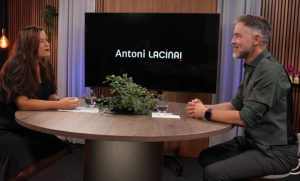
For this conversation, I spoke with Matthew Smith, Global Marketing Director at Ericsson, about his experience and perspective on leading remote teams.
Matt has a leadership style that combines clear business thinking with a strong focus on people. In our approximately 30-minute conversation, he shares experiences and ideas that can help leaders understand what it takes to keep remote teams connected, motivated, and effective.
Virtual Leadership Starts With People
Remote leadership is often discussed in terms of technology.
Video calls.
Chat platforms.
Project management systems.
Online collaboration tools.
All of these can be useful, but none of them automatically creates a strong team.
A successful virtual team still depends on human factors such as trust, communication, appreciation, accountability, and a shared sense of purpose.
This is one of the reasons I was interested in hearing Matt’s perspective.
His approach to leadership demonstrates that achieving results and caring about people do not have to be competing priorities.
Making People Feel Valued
One quality I particularly appreciate in Matt’s leadership is his ability to make people feel appreciated and valued.
This matters even more when teams work remotely.
In an office, recognition can happen naturally. A leader may notice someone’s contribution during a meeting or have an informal conversation with them during the day.
Remote work removes many of those spontaneous opportunities.
Leaders therefore need to become more deliberate about recognition.
A simple:
“I noticed what you did there. Thank you.”
can have a significant impact.
People need to know that their contribution is seen.
Supporting Growth and Development
Good leaders do not only focus on what employees can deliver today.
They also think about what those people can become tomorrow.
Matt has a strong focus on helping people develop and achieve their professional goals.
This is especially important in remote environments, where career development can easily become less visible.
When employees are not physically present in the office, leaders need to make development conversations intentional.
Ask people:
- What do you want to learn?
- Where would you like to grow?
- What responsibilities would you like to take on?
- What support do you need from me?
- How can I help you reach your goals?
These conversations help people see a future within the organization.
Empowerment Instead of Micromanagement
Remote leadership requires trust.
When a leader cannot see the team working, it can be tempting to increase control.
But effective virtual leadership is not about monitoring every activity.
It is about creating the conditions for people to perform.
That means establishing:
- Clear objectives
- Clear responsibilities
- Appropriate accountability
- Regular communication
- Freedom to make decisions
When people understand what is expected and feel trusted to deliver, they can take greater ownership of their work.
Results Still Matter
A people-focused leadership style does not mean ignoring performance.
Matt combines care for people with a strong focus on results.
That balance is important.
Organizations exist to achieve goals, serve customers, create value, and deliver results.
The leadership challenge is to achieve those results without losing sight of the people who make them possible.
Great leaders ask both questions:
“What do we need to achieve?”
and
“What do our people need in order to achieve it?”
Strategic Thinking and Human Relationships
Another important part of leadership is being able to think beyond the immediate task.
Leaders need to understand the wider business environment and connect everyday work to the organization’s goals.
At the same time, strategy only becomes reality through people.
That means leaders need both:
Strategic clarity and human connection.
One without the other creates problems.
A team may have excellent relationships but lack direction.
Or it may have a clear strategy but lack the trust and engagement required to execute it.
Innovation and Virtual Leadership
Remote teams also need space to innovate.
When people are physically separated, informal idea-sharing can become less common.
Leaders therefore need to create environments where people feel comfortable suggesting new ideas, challenging assumptions, and trying different approaches.
Innovation requires more than creativity.
It requires psychological safety and trust.
People are more likely to contribute when they believe their ideas will be taken seriously.
Why Leadership Style Matters Online
Your leadership style does not disappear when you move online.
In fact, certain qualities can become even more visible.
If you consistently listen, support people, communicate clearly, and recognize contributions, your team will experience that digitally as well as physically.
If you micromanage, communicate poorly, or only contact people when something goes wrong, remote work can amplify those problems.
Distance does not remove leadership behavior.
It exposes it.
Lessons From Matt Smith
My conversation with Matt reinforced several principles that I believe are important for virtual leaders:
Make people feel valued.
Recognition is not a luxury. It is part of building engagement.
Create opportunities for development.
People need to see how they can grow, even when working remotely.
Give people responsibility.
Empowered teams can move faster and take greater ownership.
Stay focused on results.
Care and accountability can exist together.
Build genuine relationships.
People perform better when they trust the person leading them.
Final Thoughts
Leading a remote team is not simply about transferring your existing management practices to an online environment.
It requires greater intention.
You need to communicate clearly.
You need to build trust.
You need to recognize people.
You need to create opportunities for development.
And you need to give people enough autonomy to do their best work.
Matt Smith’s experience provides a useful example of how a leader can combine a strong focus on people with strategic thinking and business results.
That combination is valuable whether your team works in one office or across the globe.
Watch the Full Interview
In this approximately 30-minute interview, Matthew Smith shares his experiences and views on leading remote teams.
If you are responsible for a virtual or distributed team, take some time to listen and consider which of these ideas you can apply to your own leadership.